What does DNA stand for?
DNA is short for deoxyribonucleic acid, the molecule that contains the information necessary for making an entire person. DNA is made up of a string of four types of “building blocks,” called bases.
DNA carries instructions for traits and disease
The cells that make up the human body each have a set of DNA, the molecule that contains the information necessary for making an entire person. The sequence of these bases is what encodes all the information held by the DNA molecule. A person’s DNA contains the blueprints telling a cell how to make sub-cellular structures and the molecules the cell needs to live and function. Every cell contains the same sequence of DNA, so every cell contains the full set of instructions for making a person.
Differences in DNA leads to differences in traits and disease propensity
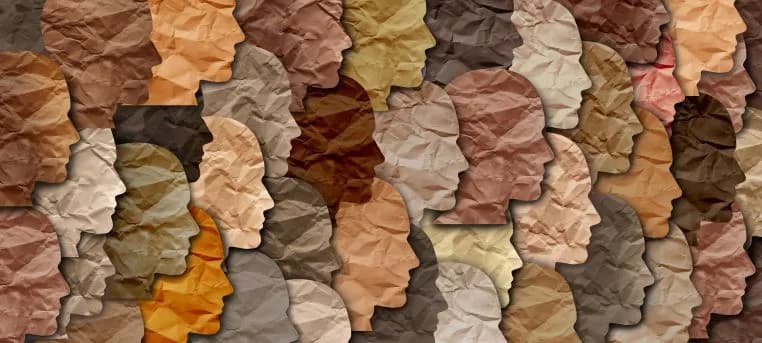
The full length of the DNA sequence in every cell is around 3 billion bases. Together, all 3 billion bases of DNA are called the genome. Most of the genome is the same between all humans– scientists estimate that any two people’s genomes are around 99.9% identical. Much of the variation we see in traits like height, skin color, and disease predisposition are due to each person’s genome sequence differing by the remaining 0.1%, or 4-5 million bases.
The genome is organized into 23 large sections called chromosomes. Each cell contains a matching pair of each chromosome. This means that every cell has two copies of the genome.
For every chromosome pair, one is inherited from each parent—that is, each cell has one copy of chromosome 1 from the mother and one from the father, one copy of chromosome 2 from the mother and one from the father… and so on.Each parent passes down one from each of their pairs of chromosomes, so that the combined genome from both parents results in one full set of paired chromosomes in their child.