Let’s unpack what having a genetic predisposition to a common condition really means. Understand the latest science on what genetic testing can detect and how you can turn these insights on you and your future child into action.
What is a “common condition”?
Common conditions are considered those that are observed frequently in a population. Common conditions like heart disease and diabetes are often caused by a combination of genetic and environmental factors.
In our preconception screening, we look at common conditions that can affect the heart, brain, and general health. Beyond “common” conditions, there are also “rare” genetic disorders that this test does not evaluate.
How are the genetics of common conditions determined?
We look at many specific genetic variants associated with each common condition. While individually each of these genetic variants might only have a small effect, their combined effect can be large. The “genetic risk score” is our estimate for how much those variants might matter for your potential child.
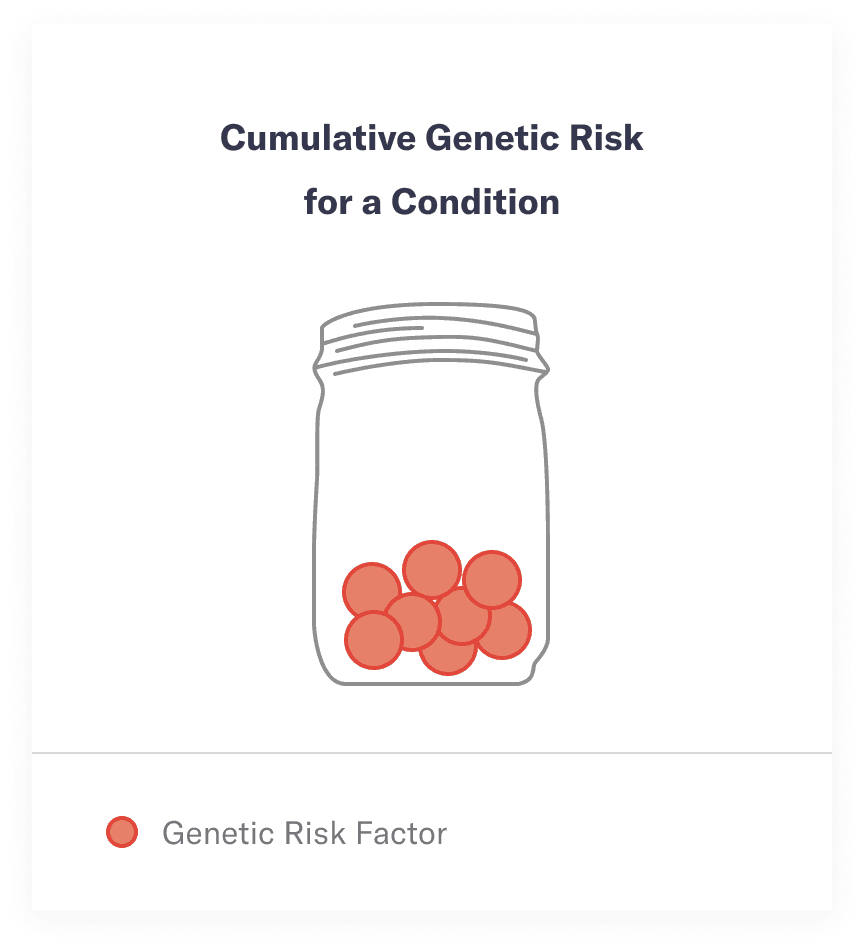
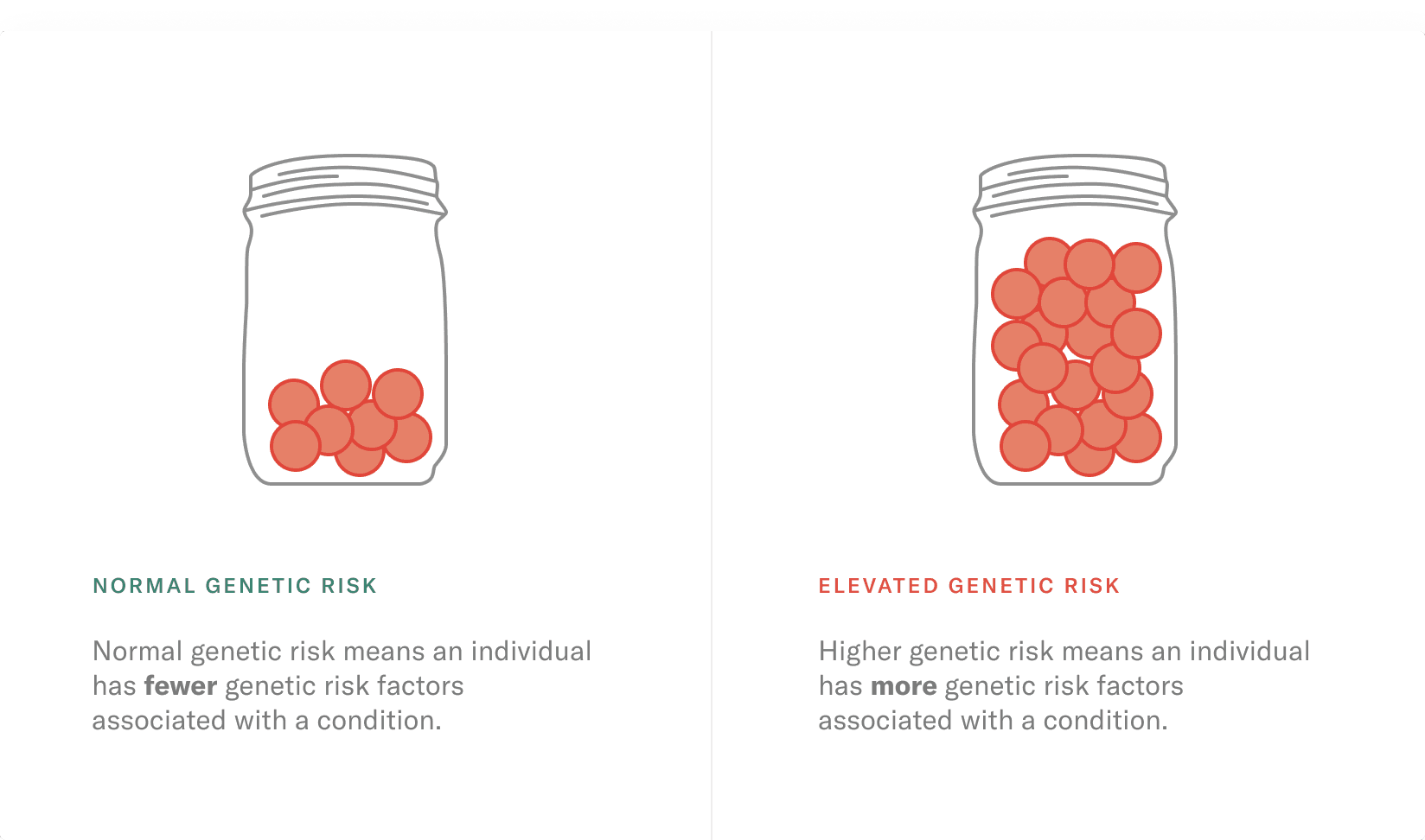
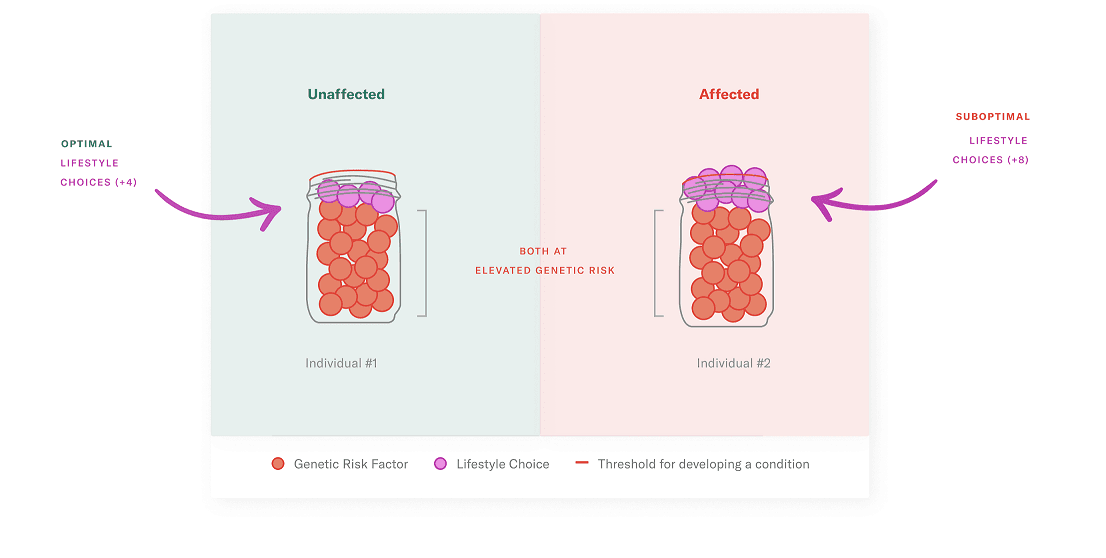
You can think of each of these variants as a marble in a jar, with the amount of marbles representing your child’s genetic susceptibility to certain conditions.
What is genetic risk?
Differences in our DNA result in different genetic susceptibility to certain conditions.
How do we estimate your future child’s genetic risks from your DNA?
Sometimes, genetic risk factors linked to increased risk for developing a condition cluster unevenly in one individual, just by random chance.
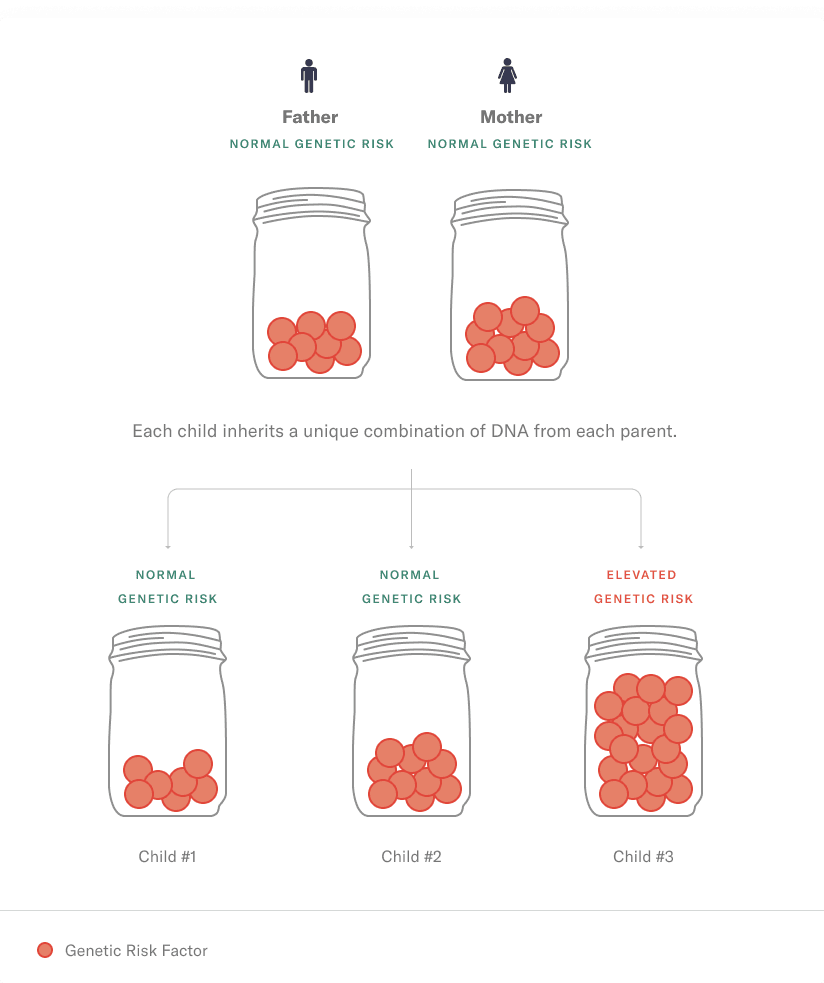
In our Couple Report, we run many simulations of the ways you and your partners’ DNA (and associated genetic risks) can combine. This gives us a sense of which disease risks might be elevated in your potential child or children. We then report to you how often we see risk-increasing combinations of genetic variants.
Think of this statistical modeling as us sorting through many jars of marbles that each represent unique DNA combinations your child could inherit.
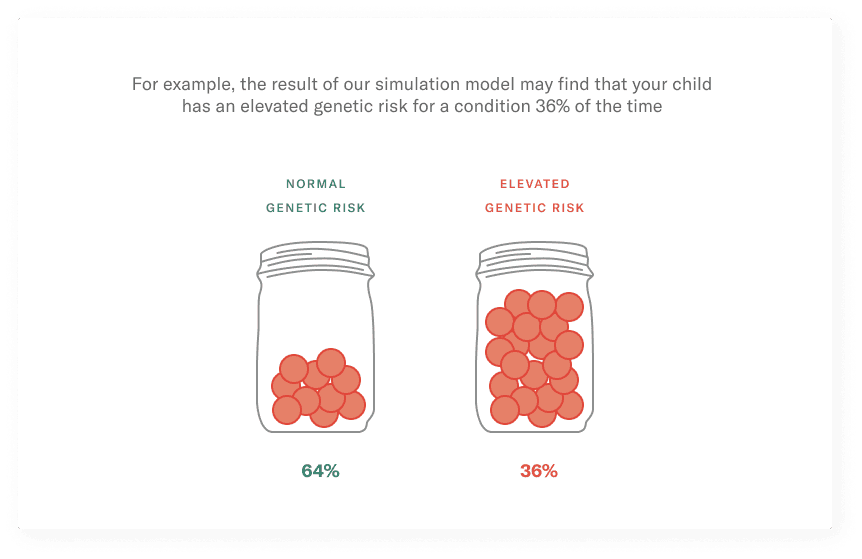
What is the chance we could have a child with elevated genetic risk for any of these conditions tested?
- Most couples receive a normal result, meaning your future child’s risk of developing the conditions tested is similar to the general population.
- Some couples receive an elevated genetic risk result, meaning the chance your future child has an increased genetic predisposition to specific conditions is higher.
If your future child has an elevated genetic risk for a condition, then the risk of developing that condition at some point in their life, also known as lifetime risk, is higher than in the general population
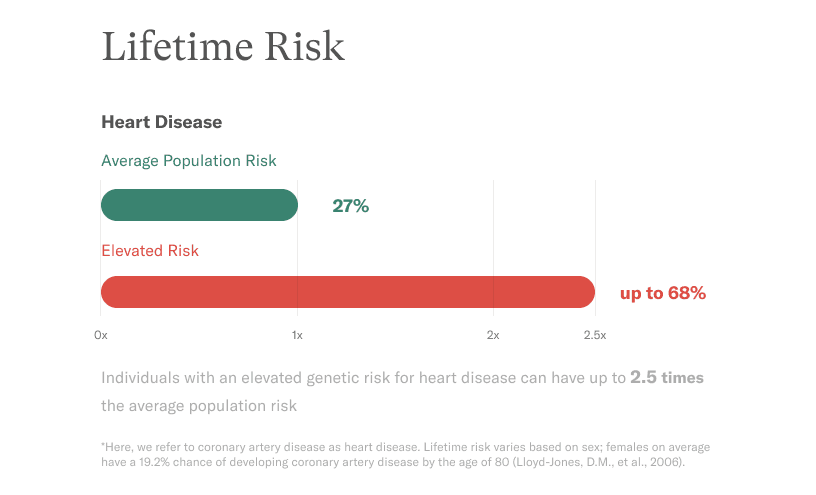
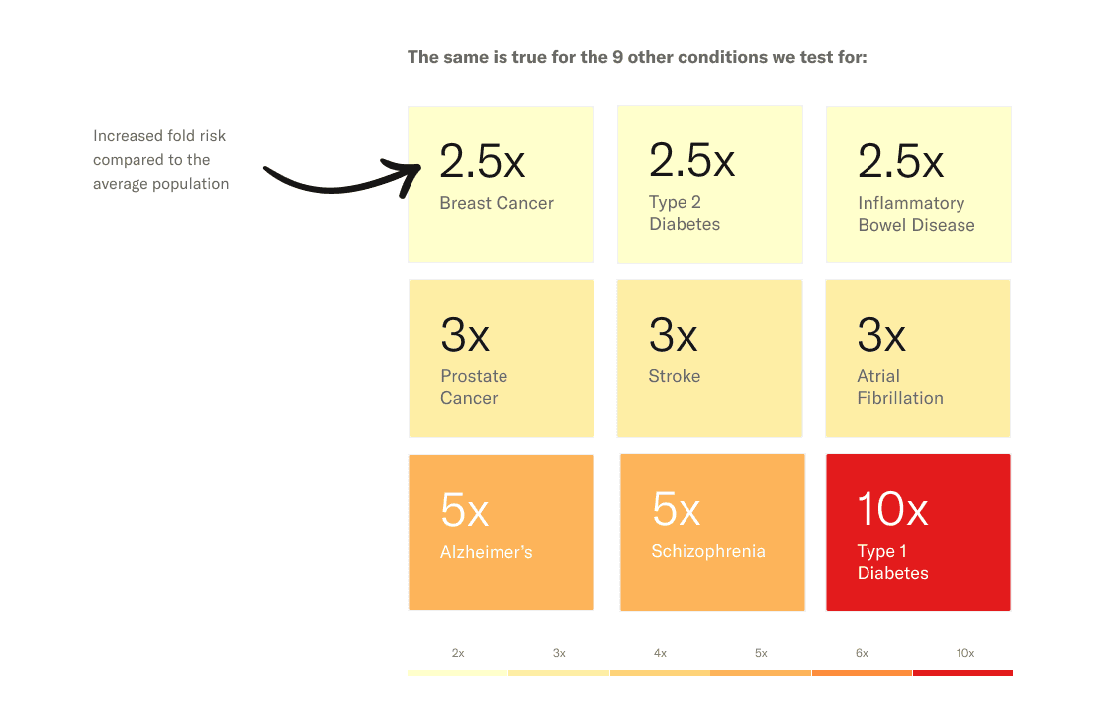
Lifetime risk can also increase for individuals with an elevated genetic risk for the 9 other conditions we test for. This diagram shows the possible increased fold risk for individuals at the top 3% of genetic risk for each condition.
What other factors impact our child's risk for developing disease beyond their genetic risks?
Given the same lifestyle choices or environmental exposures, an individual with elevated genetic risk is more likely to have an overflowing jar, representing the development of a condition, compared to an individual with normal genetic risk.
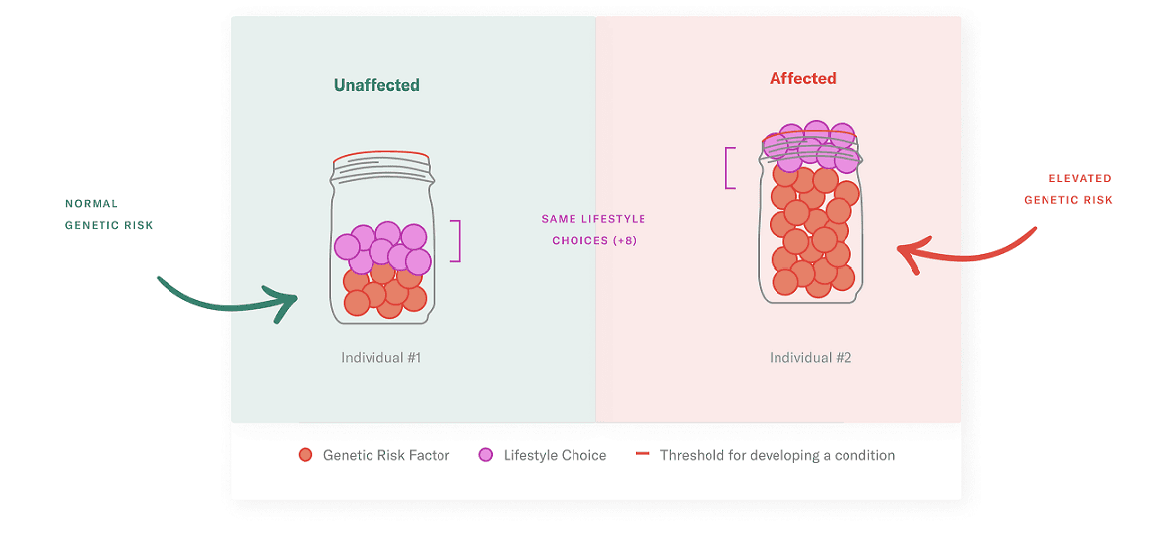
However, having an elevated genetic risk does not mean you or your child will get that condition. Your unique lifestyle choices and environmental exposures can also impact whether you’ll be affected. For example, someone with the same genetic risk as you can develop a condition while you do not because you may have made more optimal lifestyle choices.
Learn more about the basics of genetic risk scores through a visual explainer.
What can we do about our results?
Knowing if your children may be at an increased genetic risk for certain common conditions empowers you to be proactive about your reproductive health and plan for the future.
Early prevention and treatment
- Increased awareness, screening, and lifestyle modifications can help prevent or identify conditions early
Embryo screening
- If desired, screening your embryos created through in vitro fertilization (IVF) can potentially reduce your child’s genetic risk