For most people, thinking about having a baby is exciting. For me, it began with a question: How can I have a child knowing I could pass on the disease that took my father’s life?
Long before I ever thought about marriage or children, I knew that because I carry a rare genetic condition called adrenoleukodystrophy (ALD), my path to parenthood would look different than that of my peers.
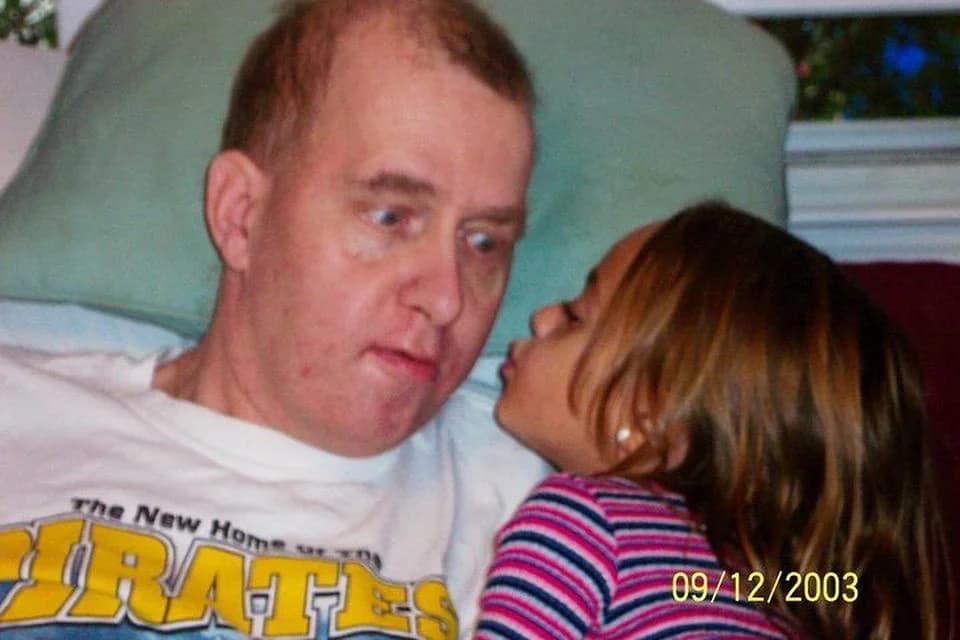
When I was three years old, my father was diagnosed with ALD, a rare inherited neurological disease caused by a variant on the X chromosome. Although ALD often affects boys in childhood, some men don’t develop symptoms until adulthood, as was the case for my dad. Over the next two years, I watched him lose the ability to walk, speak, and swallow. Eventually, he no longer knew who I was. He quickly deteriorated, passing away when I was in kindergarten.
With my father’s diagnosis, my family had learned about the X-linked inheritance pattern of ALD. Because my father had ALD, I inherited the genetic variant that causes the condition. As an ALD carrier, each of my future children would have a 50% chance of inheriting that variant.
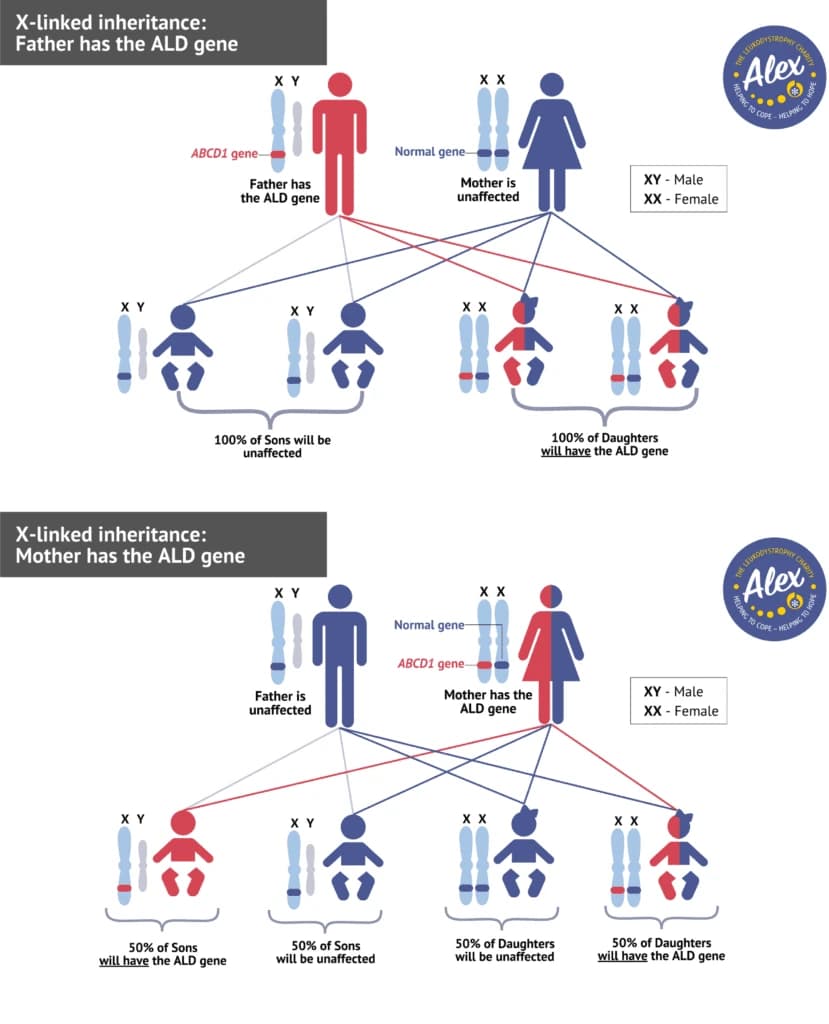
Source: Alex TLC
When I was eight years old, my mom sat me down and explained to me what it meant to be a carrier. With the help of a genetic counselor, over the next several years I learned not only about ALD, but also about the reproductive options that might one day be available to me.
While living with the knowledge that I carry the genetic variant for ALD was not always easy, having knowledge early gave me the ability to prepare for my future.
Why I Plan To Use IVF with PGT-M to Build My Family
While there are many family-building options available to individuals who carry seriously disabling or deadly genetic conditions, I always felt that in vitro fertilization (IVF) with pre-implantation genetic testing for monogenic disorders (PGT-M) was the path that aligned most closely with my hopes for the future. It offered me the possibility of having a biological child while drastically reducing my chances of passing on ALD.
IVF with PGT-M combines assisted reproductive technology with genetic testing to provide families with information about embryos before pregnancy. During the IVF process, embryos are created in a laboratory and a small sample of cells from each embryo can be tested for a specific genetic condition, such as ALD, before an embryo is selected for transfer.
For people like me, this technology creates an opportunity that did not exist for previous generations. Instead of discovering genetic risks after pregnancy, PGT-M allows prospective parents to use information early in the process and make decisions that align with their values and their hopes for their future family.
PGT-M is not about creating a “perfect” child or eliminating the uncertainty that comes with parenthood. It is about using the tools available to make an informed choice and reduce the chance of passing on a condition that has had a profound impact on my family.
The Future of Reproductive Genetics
I am one of the lucky ones: I know I am a carrier of a genetic condition before having children. Many people do not discover they carry a genetic risk until they are already navigating pregnancy, facing an unexpected diagnosis, or learning that their child has inherited a condition. But it does not have to be this way.
Advances in reproductive genetics are giving prospective parents more information and more choices than ever before. While PGT-M is the testing option that is most meaningful for my journey because it allows embryos to be tested for a specific single-gene condition like ALD, other forms of preimplantation genetic testing can provide additional information about embryos.
For example, preimplantation genetic testing for aneuploidy (PGT-A) evaluates embryos for changes in chromosome number, which can impact embryo development and pregnancy outcomes. Newer approaches, such as preimplantation genetic testing with whole genome sequencing (PGT-WGS), are expanding the ability to look across more of an embryo’s genetic information. Orchid Health is at the forefront of this approach, using whole genome sequencing to provide prospective parents with a broader view of their embryos’ genetic information.
For someone like me, who is at risk of passing on a specific monogenic condition, this broader approach could also simplify the testing process. With traditional PGT-M, testing for a specific single-gene condition typically requires a customized test to be developed for the family, including a specific probe or assay. I live in a different country than my family, including my mom, so needing her DNA to create a probe would cause extra hurdles in my IVF PGT journey.
With PGT-WGS, the relevant gene can instead be assessed as part of the embryo’s broader genetic sequence, meaning that testing for ALD does not require the development of a condition-specific probe in the same way PGT-M does. For me, that represents an important advancement: the possibility of gaining information about ALD while also looking across the embryo’s genome, without having to create a separate, customized test specifically for my family.
At Orchid Health, these technologies are helping prospective parents better understand their options and make informed decisions that align with their personal goals and values. Whether someone is trying to prevent passing on a known inherited condition, understand chromosomal health, or gain more information about their embryos through whole genome sequencing, genetic testing can provide knowledge at an important moment in their family-building journey.
Building My Future Family with Hope
One day, I look forward to utilizing the reproductive health tools available to me to reduce the chance of passing on ALD while making decisions that feel right for my future family. My journey with ALD has taught me that knowledge can be powerful: not because it changes the past, but because it can help shape the future.
I cannot change the gene I carry or the experiences my family has lived through, but I can use the information and resources available to me to make thoughtful decisions about the next generation. I am grateful to live in a time when science can provide families like mine with more options, more support, and more hope.